What It Costs to Reach Mars
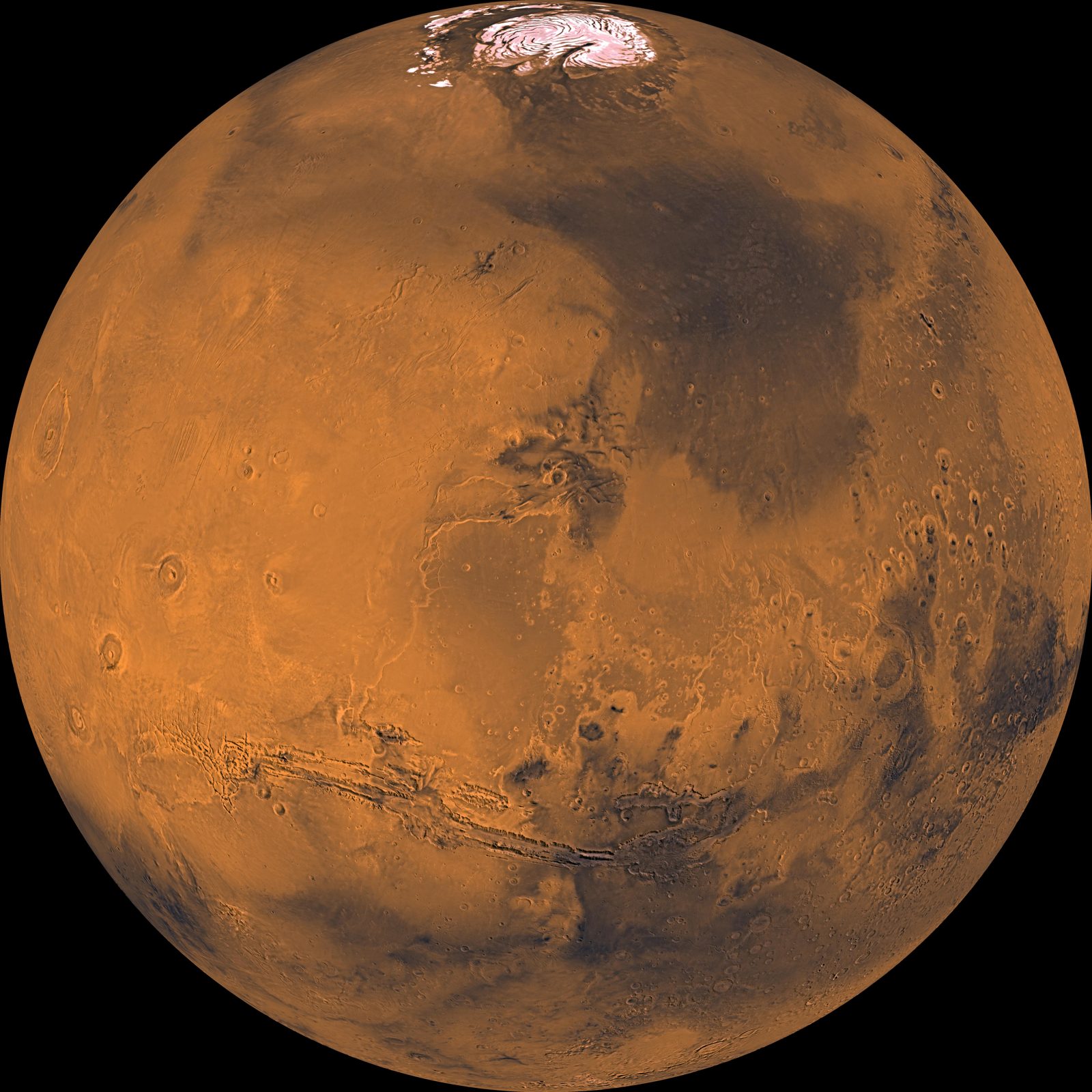
Stand on a cold desert night and find Mars: a steady rust-colored point, never more than a few arc-minutes wide. Everything that separates you from it can be written as a bill. The rocket. The fuel. The air your crew breathes for two or three years. The shielding between their cells and the galaxy. The machines that will have to make the ride home out of thin, cold, carbon-dioxide air.
For most of the space age, that bill was too long to read to the end. It is getting shorter. Here is where it stands.
Line one: getting off Earth
Every trip to Mars begins with the most expensive few hundred kilometers in the solar system: the climb from the ground to low Earth orbit.
In 2018, NASA engineer Harry W. Jones published a comparison of launch costs across the history of spaceflight. Using a cost of about $1.5 billion per flight and a payload of 27,500 kg, he put the Space Shuttle at about $54,500 per kilogram to low Earth orbit; adjusted to 2018 dollars, about $61,700 per kilogram (Jones, NASA NTRS, 2018).
Then the curve broke. Using SpaceX's advertised price at the time, $62 million to lift up to 22,800 kg, Jones calculated Falcon 9 at about $2,720 per kilogram, roughly a twentieth of the Shuttle. Falcon Heavy, at $90 million for 63,800 kg, came out at about $1,400 per kilogram (Jones, 2018). From 1970 to 2000, he found, average launch costs barely moved, at around $18,500 per kilogram in 2018 dollars. Thirty flat years, then a cliff.
One caveat: these figures divide a customer price by a rocket's maximum capacity. Real payloads rarely fill a rocket, and a list price is not what a flight costs the company. The direction, though, is not in dispute.
Today, SpaceX's published price sheet lists a Falcon 9 launch at $74 million (standard payment plan, through 2026), with a maximum capability of 22,000 kg to low Earth orbit on a fully expendable vehicle (SpaceX Capabilities & Services). In nominal dollars that has risen since 2018. Measured against the Shuttle, it is still a different world.
The next step: targets, not results
Starship is where the next drop is supposed to come from. SpaceX describes it as a fully reusable system designed to carry more than 100 metric tons to orbit, and designed to deliver payloads "at a lower marginal cost per launch than our current Falcon vehicles" (SpaceX, Starship). Those are design goals. Starship has not yet flown a paying payload at that scale, and SpaceX has not published a per-kilogram price to Earth orbit.
SpaceX's Starship page does list one Mars number. It offers cargo flights to the Martian surface "no earlier than 2028, at a rate of $100 million per metric ton" (SpaceX, Starship). That works out to about $100,000 per kilogram delivered to Mars. It is an advertised rate for a service that has not flown, not a demonstrated cost.
Line two: the whole mission
A launch is a ticket. A crewed Mars mission is the whole expedition: rockets, a deep-space habitat, landers, an ascent vehicle, life support and years of operations. Every figure below is an estimate.
- 1989, NASA's "90-Day Study." After a presidential call to return to the Moon and go on to Mars, NASA estimated the long-term cost of the program, which covered a lunar outpost followed by human Mars exploration, at approximately $500 billion spread over 20 to 30 years. NASA's own history office calls it "a truly staggering figure" (NASA History, Space Exploration Initiative). The program never went ahead.
- 2019, the Science and Technology Policy Institute (IDA). Congress directed NASA to commission an independent study of a 2033 Mars mission. STPI found a 2033 departure "infeasible" under all the budget scenarios it examined. For a mission that would orbit Mars, without landing, departing in 2037, it estimated a total of $87 billion in fiscal year 2017 dollars. About $45 billion of that was the added cost of the Mars mission itself, beyond rockets and spacecraft NASA was already paying for (IDA/STPI, Evaluation of a Human Mission to Mars by 2033, IDA Document D-10510). The same study put total U.S. human spaceflight spending from FY2019 to FY2037, including lunar landings and Mars surface systems, at about $217 billion (FY2017 dollars).
- The government's own watchdogs. NASA's Office of Inspector General projected $93 billion in spending on the Artemis lunar effort from FY2012 through FY2025, and about $4.1 billion per launch to produce and operate a single SLS rocket and Orion capsule for Artemis I through IV (NASA OIG, IG-22-003). In 2024 testimony, the Inspector General warned that NASA still lacked a comprehensive Artemis cost estimate as it began a Moon to Mars effort "at a cost that could easily reach into the hundreds of billions of dollars" (NASA OIG, CT-24-001).
The plain conclusion: nobody has a validated price for putting humans on Mars, because nobody has yet fixed the design. The published numbers fall within a range of tens to hundreds of billions of dollars, and they depend heavily on what is counted.
Line three: what still has to get cheaper, or be invented
Cheap launch shrinks the first line of the bill. It does not, by itself, solve the problems below, and that is where the real cost of living on Mars hides.
Making the ride home on Mars
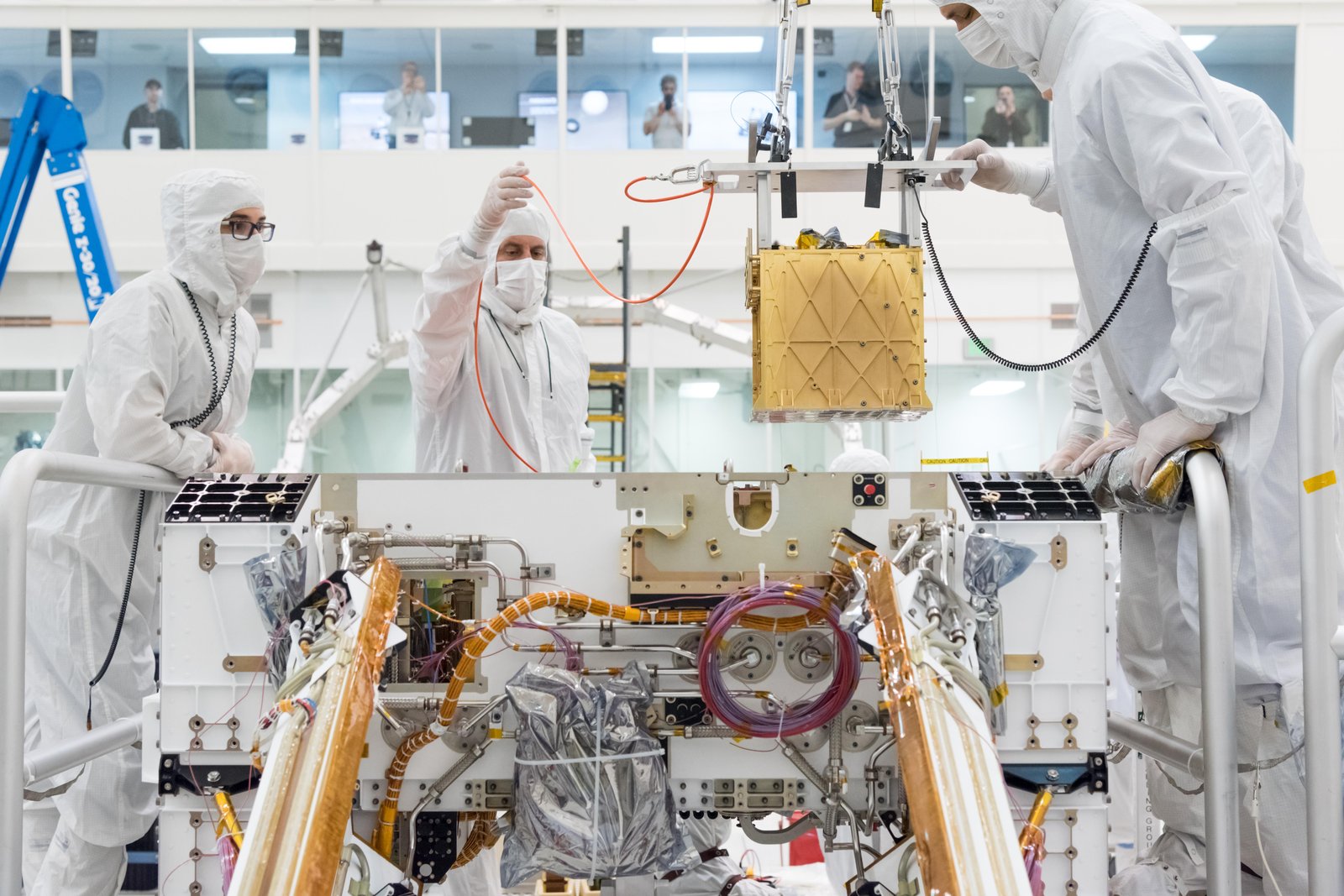
Launching a crew off Mars takes a lot of oxygen. NASA estimates a crew of four would need about 25 metric tons of oxygen to burn roughly 7 metric tons of fuel (NASA, "MOXIE Could Help Future Rockets Launch Off Mars"). Hauling all of that from Earth is very expensive. Making it on Mars is the alternative.
That idea has now been tested on Mars itself. MOXIE, a device about the size of a microwave oven, rode on NASA's Perseverance rover and pulled oxygen out of the Martian atmosphere 16 times. In total it made 122 grams, about what a small dog breathes in ten hours. At its best it produced 12 grams per hour at 98% purity or better, twice NASA's original goal (NASA, MOXIE completes mission).
It works. Now it has to grow, from grams to tens of tons, running reliably for months with no technician nearby.
Closing the loop on life support
Every liter of water and every breath of air you can recycle is mass you don't have to launch. NASA says long missions need to recover close to 98% of the water a crew starts with. The International Space Station's life support system has now reached that mark, up from 93–94%, by adding a brine processor that pulls the last water out of urine brine (NASA, water recovery milestone). That is a real achievement. It was also reached in low Earth orbit, where spare parts and resupply are a few hours away. A Mars crew would have neither.
Radiation
On its 253-day cruise to Mars, the Curiosity rover carried an instrument that measured the radiation inside its spacecraft. From that data, scientists estimated a round trip with similar shielding and propulsion would give an astronaut a dose equivalent of about 0.66 sievert (±0.12), before counting any time spent on the surface (Zeitlin et al., Science, 2013). For comparison, NASA's current standard limits an astronaut's whole career to an effective dose of less than 600 millisieverts (0.6 Sv) (NASA-STD-3001, Human Performance). The two are calculated slightly differently, but the dose from the trip alone is roughly comparable to NASA's entire career limit. Faster transits, better shielding, and a better understanding of the biology are all still needed.
Refueling in orbit
Big ships reach Mars with full tanks only if those tanks are filled in orbit. SpaceX says it plans to use tanker Starships to refill a ship in low Earth orbit before it heads to Mars (SpaceX, Starship). The same approach underpins NASA's Moon lander plans, and a March 2026 NASA OIG audit spells out how hard it is. For the Artemis lunar landings, SpaceX plans to fill an orbiting depot with more than 10 tanker flights. The OIG notes that the technologies and processes involved "have never been done vehicle-to-vehicle," and the key demonstration had slipped from March 2025 to March 2026. NASA counts cryogenic propellant transfer among the provider's most significant technical challenges (NASA OIG, IG-26-004). As of this writing (October 13, 2026), SpaceX had not reported carrying it out: its September 15, 2026 update still described the first orbital propellant transfer as an upcoming flight test (SpaceX Updates).
The honest bottom line
Here is what the ledger says. The cost of reaching orbit has fallen by about twentyfold since the Shuttle, and that change is real (Jones, 2018). The cost of a human Mars mission is still an estimate, ranging from tens to hundreds of billions of dollars. And the hardest items on the bill aren't about launch at all. They are oxygen made by the ton on Mars, life support that runs for years without resupply, protection from radiation, and refueling in orbit at scale.
Each of those has moved from paper to hardware in the past decade. A microwave-oven-sized box made oxygen on Mars. A space station recycles 98% of its water. A robot measured the radiation of the crossing so that people won't have to guess.
Mars is still far away. But we can now itemize the bill, and every item on it is an engineering problem, not a mystery. Engineering problems get solved.
MarsFirst is an independent publication. Mention of NASA, ESA, or any company does not imply their endorsement. All cost figures are as reported in the cited sources; estimates and targets are labeled as such and are not predictions of any MarsFirst timeline.
Image credits
NASA imagery is generally not subject to U.S. copyright. Its use here does not imply endorsement by NASA.
- Hero: "Global Color Views of Mars" (PIA00407). Credit: NASA/JPL/USGS. https://science.nasa.gov/photojournal/global-color-views-of-mars/
- Section image: "This Is One Mars Rover With MOXIE" (PIA23154). Credit: NASA/JPL-Caltech. https://science.nasa.gov/photojournal/this-is-one-mars-rover-with-moxie/
Sources
- Jones, H. W. (2018). "The Recent Large Reduction in Space Launch Cost." 48th International Conference on Environmental Systems, ICES-2018-81. NASA Technical Reports Server. https://ntrs.nasa.gov/citations/20200001093 (PDF: https://ntrs.nasa.gov/api/citations/20200001093/downloads/20200001093.pdf)
- SpaceX. "Capabilities & Services" (Falcon 9 price sheet). https://www.spacex.com/assets/media/Capabilities%26Services.pdf (accessed 2026-10-13)
- SpaceX. "Starship." https://www.spacex.com/vehicles/starship/ (accessed 2026-10-13)
- SpaceX. "Updates" (Sept. 15, 2026: "Starship to Orbit"). https://www.spacex.com/updates/ (accessed 2026-10-13)
- NASA History Office. "Space Exploration Initiative." https://www.nasa.gov/history/sei/
- Linck, E., Crane, K. W., Zuckerman, B. L., et al. (2019). Evaluation of a Human Mission to Mars by 2033 (IDA Document D-10510). IDA Science and Technology Policy Institute.
- NASA Office of Inspector General (2021). NASA's Management of the Artemis Missions (IG-22-003). https://oig.nasa.gov/office-of-inspector-general-oig/ig-22-003/
- NASA Office of Inspector General (2024). Congressional testimony, "Key Challenges Facing NASA's Artemis Campaign" (CT-24-001), Jan. 17, 2024. https://oig.nasa.gov/wp-content/uploads/2024/01/ct-24-001.pdf
- NASA Office of Inspector General (2026). NASA's Management of the Human Landing System Contracts (IG-26-004), Mar. 10, 2026. https://oig.nasa.gov/news/artemis-lander-program-faces-schedule-delays-and-unmitigated-crew-safety-risks/ (PDF: https://www.oversight.gov/sites/default/files/documents/reports/2026-03/IG-26-004.pdf)
- NASA. "MOXIE Could Help Future Rockets Launch Off Mars." https://www.nasa.gov/solar-system/moxie-could-help-future-rockets-launch-off-mars/
- NASA. "NASA's Oxygen-Generating Experiment MOXIE Completes Mars Mission" (Sept. 2023). https://www.nasa.gov/missions/mars-2020-perseverance/perseverance-rover/nasas-oxygen-generating-experiment-moxie-completes-mars-mission/
- NASA. "NASA Achieves Water Recovery Milestone on International Space Station." https://www.nasa.gov/missions/station/iss-research/nasa-achieves-water-recovery-milestone-on-international-space-station/
- Zeitlin, C., Hassler, D. M., Cucinotta, F. A., et al. (2013). "Measurements of Energetic Particle Radiation in Transit to Mars on the Mars Science Laboratory." Science 340(6136), 1080–1084. https://ui.adsabs.harvard.edu/abs/2013Sci...340.1080Z/abstract
- NASA. NASA-STD-3001 Vol. 1, Section 4.0 "Human Performance" (career radiation exposure limit). https://www.nasa.gov/reference/4-0-human-performance/
Follow the work at the Galactic Center.
The physics of the Milky Way’s core, what’s measured and what’s still open, and the people working on it.
Explore the Galactic Center